
Defender Statement on Removal of Slavery Murals

Defender Association of Philadelphia Chief Defender Keisha Hudson and  Board President Paul Hetznecker released the following statement on February 4, 2026:


“The Defender Association of Philadelphia stands with the Avenging Ancestors Coalition (AOAC) in condemning the Trump Administration’s attempt to erase Black history. We applaud the immediate efforts to confront this blatantly racist act, which seeks to replace historical truth with falsehoods about our country’s collective past.


“We also commend the Parker Administration for taking swift legal action to seek an injunction requiring the murals’ reinstallation and to prevent any further efforts to destroy or suppress Black heritage.


“Twenty-five years ago, the AOAC—led by attorney Michael Coard—successfully pushed the National Park Service and the City of Philadelphia to tell the full truth about Independence Mall, including the experiences of the people enslaved by George Washington. That work ensured that Black history, and Black pain, were no longer excluded from the nation’s origin story.


“Until last week, the narrative murals at the President’s House served as a permanent reminder that a nation founded on liberty was also built on slavery. Their removal is a deliberate act of erasure—one that whitewashes history and undermines the hard-fought commitment to honesty in our public spaces.


“This action is part of the Trump Administration’s broader pattern of attacks on historical truth. That this legal struggle is unfolding during Black History Month—a time meant to acknowledge and confront the realities of slavery and racism—only underscores the deliberate nature of this erasure. These efforts cause real harm, weakening our collective understanding of how this country was built—and who paid the price.


“This moment demands collective resistance. The Defender Association stands with all those committed to racial justice and calls on others to speak out against the erasure of Black history and culture, which are inseparable from American history and culture. Telling the full truth about our past is essential to building a more just future.”


# # #

Defender Statement on “ICE Out” Legislation

“The Defender Association of Philadelphia applauds the ‘ICE Out’ legislation introduced by Councilmembers Kendra Brooks and Rue Landau and co-sponsored by a majority of City Council. This legislation will strengthen Philly’s status as a welcoming city and set clear, enforceable boundaries on the role of federal immigration enforcement in Philadelphia. At a moment when noncitizens are facing fear and uncertainty, this legislation sends an important message: access to justice and public safety should not depend on immigration status.


“Everyone should be able to engage with the legal system without intimidation or surveillance by federal immigration authorities. Right now, noncitizens are afraid to attend immigration court or ICE check-ins for fear of detention or deportation, practices federal courts have found to be illegal. 


“In our criminal courts, we’ve seen firsthand how noncitizens are less likely to appear as witnesses, victims, or even defendants trying to resolve their cases for fear that masked ICE agents will detain them. This disrupts court operations, destabilizes families, weakens trust in the justice system, and has a negative impact on public safety. 


“Transparency and accountability are cornerstones of public safety, and no law enforcement agency operating in Philadelphia should be exempt. ICE’s use of masked agents, unmarked vehicles, and questionable authority creates fear and confusion, making it harder for residents–citizens and noncitizens alike–to understand who is exercising law enforcement power, and why.


“The ‘ICE Out’ legislation introduced today proactively establishes clear boundaries between local and federal governance and enforcement. It prevents city offices and public spaces from being used in ways that undermine due process, damage community trust, or compromise the fair administration of justice.


“We thank City Council for advancing this legislation and reaffirming Philadelphia’s commitment to policies that protect public safety, uphold transparency, and ensure that everyone in our city can access the justice system without fear.”

Support Immigration Defense!

In 2026, we launched our Immigration Law Practice to expand our ability to expand the Defender’s ability to protect noncitizens facing immigration consequences—both those navigating the criminal legal system and individuals with no contact with it. The ILP brings dedicated legal expertise into the Defender Association to ensure noncitizens receive accurate advice, informed advocacy, and representation. Read more here. 

The launch of the Immigration Law Practice was made possible through the support of key partners and funders, including the Stoneleigh Foundation and the City of Philadelphia. We’re grateful for the support but sustaining this work will require even more funding. Fill our our donation form below to help us have real impact! 👇🏾

Defender Launches Immigration Law Practice

The new practice will expand the office’s ability to protect noncitizens facing immigration consequences.


PHILADELPHIA—The Defender Association of Philadelphia today announced the launch of its new Immigration Law Practice (ILP), expanding the office’s ability to protect noncitizens facing immigration consequences—both those navigating the criminal legal system and individuals with no contact with it.


As immigration enforcement has grown more aggressive, even a minor case–or no criminal contact at all–can put noncitizens at risk of detention, family separation, or deportation. The new ILP brings dedicated legal expertise into the Defender Association to ensure noncitizens receive accurate advice, informed advocacy, and representation.


“For many of our clients, one court case can change the course of their entire lives,” said Chief Defender Keisha Hudson, “In the current climate, it’s critical that noncitizens have attorneys who understand how closely the criminal and immigration systems are connected—and who can advocate for outcomes that don’t cause unnecessary harm.”


The Immigration Law Practice will be led by Lilah Thompson, an experienced immigration attorney with a strong background in representing noncitizens facing complex legal challenges. She will be working alongside trial attorneys, social workers, and mitigation specialists to identify immigration risks early and help shape defense strategies that protect clients and their families whenever possible.


“Too often, people are forced to navigate a system that doesn’t fully account for the consequences they face as noncitizens,” Thompson said. “This unit is about making sure our clients have clear information, strong advocacy, and a real chance to protect their futures.”


The launch of the Immigration Law Practice was made possible through the support of key partners and funders, including the Stoneleigh Foundation, City of Philadelphia and the Parker Administration. Their investment reflects a shared commitment to fairness, due process, and a justice system that works better for everyone.


“We’re deeply grateful to the Stoneleigh Foundation, City Council and Mayor Parker for recognizing the urgency of this work,” Hudson said. “Sustained funding will be essential to ensure this practice can grow and continue meeting the needs of noncitizen clients across Philadelphia.”


The Defender Association also emphasized that protecting noncitizens involved in the justice system requires collaboration across institutions. Courts, prosecutors, law enforcement agencies, and policymakers all have a role to play by supporting diversion, considering immigration consequences in legal decisions, and committing to practices that respect due process and human dignity.


“When justice system partners work together thoughtfully, we can reduce unnecessary harm and strengthen families and communities,” Hudson added. “This new practice is an important step—but lasting change depends on continued partnership and investment.”


# # #


Emergency Bail Hearings Safely Release 200 People

EBH has also helped reduce Philly’s prison population by over 1,000


PHILADELPHIA—One year after launching the Emergency Bail Hearing (EBH) initiative, the Defender Association of Philadelphia has helped more than 200 people safely return home while awaiting trial. Between October 7, 2024, and October 7, 2025, 230 people had their cases heard in Emergency Bail Hearings before Judge Karen Simmons. Of those, 216 people —93.9%— were ordered released. 


“This is what happens when justice system partners work together toward a shared goal of fairness and safety,” said Chief Defender Keisha Hudson, “The Emergency Bail Hearing program has given hundreds of Philadelphians a chance to fight their cases from home, stay connected to their families, and access the services they need to improve their lives.”


The EBH initiative is a collaboration between the Defender Association, the Philadelphia Department of Prisons (PDP), the First Judicial District (FJD), and the District Attorney’s Office (DAO). The program was launched to respond to the urgent need to safely reduce the city’s jail population amid severe staffing shortages and unsafe conditions.


Since the EBH program began, Philadelphia’s jail population has dropped dramatically — from 4,700 in October 2024 to under 3,600 since April 2025. While the Emergency Bail Hearings are only one part of this progress, they demonstrate what’s possible when justice system partners coordinate effectively.


“This program is proof that dialog and cooperation between Philly’s justice system stakeholders works,” said Hudson, “Working together to identify people who can be safely released is just one way we can create a more just and sustainable system for everyone.”

# # #

Join our Next Attorney Class!

We're now accepting applications for our Fall 2026 Attorney Class!


APPLY HERE

Overview

Start your legal career where you can make the most difference! Every year, the Defender hires a new class of attorneys—advocates who driven to have a positive impact on our clients from day one.


Each year, the Defender hires approximately 15 new attorneys to join our office in the fall. We will soon begin accepting applications for the Fall 2026 class. Eligible applicants include:


Individuals already admitted to practice in Pennsylvania


Law students who have completed their 2L or 3LE year and plan to sit for the Pennsylvania Bar Exam before September 2026


If you are still in law school and not yet eligible to apply for a staff attorney position, we encourage you to explore our Summer Internship Program. 

Our Process:

1. Resume, Cover Letter, and Transcript Review
We begin by collecting resumes, cover letters, and transcripts. Once they have all been reviewed, we'll move on to the next step.


2. Introductory Interview
Selected applicants will be invited to a brief interview (under 30 minutes) with the Director of Attorney Training and Recruitment or another senior team member. This may be conducted virtually if needed.


3. Written Follow-up Questions
Applicants advancing beyond the first interview will receive a short set of follow-up questions to complete in writing.


4. Panel Interview
Applicants selected for this round will participate in a simulation-style panel interview, held in person at the Defender Association.


The panel will include 2–3 senior attorneys portraying roles such as judge, prosecutor, and client.


This exercise is designed to reflect the courtroom advocacy and client-centered approach required of new attorneys at the Defender.


5. Final Interview

Applicants who excel in the panel interview will be invited to a final interview with members of the Defender executive team and others.


At this stage, we will request personal/professional references and an unofficial transcript.


Yes, this really is the final step!


Due to the volume of applications and the multi-step nature of our process, application review can take time. We appreciate your patience as we give each submission the careful attention it deserves.

Newly hired attorneys will take part in an intensive five-week training program that includes trial advocacy, courtroom observation, and instruction. Following training, new Defenders enter a structured rotation through trial and pre-trial units, starting in Municipal Court and culminating in jury trials in the Court of Common Pleas.

When does the application open?
We typically post the application in late August or early September to hire for the following fall. First-round interviews may take several weeks to begin after applications are submitted.


How many attorneys are hired each year?
While this may vary depending on the budget provided by Philadelphia City Council, we aim to hire at least 15 new attorneys for each Fall class.


Are only Fall Class positions available?
No. In addition to hiring for our Fall Class, we occasionally post openings for a Spring Class, and we regularly seek experienced attorneys to join our team. Visit our [Employment Opportunities Page] for current listings.


I didn’t attend a local law school and I’m not from Philadelphia. Should I apply?
Absolutely. We’re looking for passionate, committed litigators—no matter where you’re from. If you’re ready to fight for our clients in court, we want to hear from you.


Do you hire directly into appeals or policy work?
All new attorneys begin their careers at the Defender by completing the trial/non-trial rotation. Opportunities in appeals or policy are considered after this rotation is complete.


Who can I contact with questions about my application?
Feel free to reach out to:
Ben Jaye, Director of Attorney Training and Recruitment at or BJaye@philadefender.org.

We're now accepting applications for our Fall 2026 Attorney Class!


APPLY HERE

Immigrant Rights & Resources

Everyone in Philly has basic rights, included undocumented residents. We've provided some some basic information for our immigrant clients, families and communities to help you navigate what to do if you encounter ICE agents in Philly.


You can also download, print and share this info with your community: 

In English  |  In Spanish

Derecho a guardar silencio: No tienes que responder preguntas de la policía o de ICE sobre tu estatus migratorio, lugar de nacimiento u otros datos personales. Puedes preguntar con calma: “¿Estoy libre para irme?” Si dicen que sí, puedes irte. Si decides guardar silencio, dilo en voz alta: “Estoy ejerciendo mi derecho a guardar silencio” porque todo lo que digas puede usarse en tu contra.


Derecho a un abogado (y a un intérprete) en casos penales: Si la policía te arresta por un asunto penal, diles de inmediato que quieres hablar con un abogado. Tienes derecho a un abogado, y si no puedes pagar uno, un juez debe asignarte un defensor público. Si tienes el nombre o la tarjeta de tu abogado, dáselos a la policía; si no, pide una lista de servicios legales gratuitos. También tienes derecho a un intérprete en tu idioma para que puedas entender todo el proceso. No firmes nada ni aceptes ningún acuerdo sin que tu abogado esté presente.


Cómo conseguir un defensor público: Si te acusan de un delito y no puedes pagar por un abogado, tienes derecho a un defensor público. Sin embargo, la Defender Association solo puede representarse si un juez te asigna un defensor. Si te asignan uno, muestra su nombre o su tarjeta a la policía o al tribunal. Si no te asignan uno, la policía aún debe permitirte hacer una llamada gratuita. Pide una lista de organizaciones que ofrecen ayuda legal o apoyo a inmigrantes.


Derecho a un abogado en procedimientos de deportación: Si ICE te arresta por una violación migratoria, tienes derecho a un abogado, pero no se te asignará uno de forma gratuita. Debes conseguir tu propio abogado y cubrir los gastos legales. Si no tienes representación migratoria, pídele a ICE una lista de abogados de inmigración de bajo costo.


Si ICE llega a tu casa: No tienes que dejar entrar a agentes de inmigración a tu casa a menos que te muestren una orden de arresto válida firmada por un juez. NO abras la puerta para pedir la orden; mejor, habla con el agente desde la puerta y pídele que la pase por debajo o por la ranura del correo para que puedas leerla. Si tienes abogado, llámalo para que revise la orden contigo. Incluso en tu casa, mantienes tu derecho a guardar silencio. Si los agentes de ICE entran por la fuerza, mantén la calma, no resistas y di: “No doy mi consentimiento para que entren. Voy a guardar silencio. Quiero hablar con un abogado.”


Si ICE te arresta o detiene: Tienes derecho a guardar silencio y a llamar a un abogado. También tienes derecho a contactar al consulado de tu país (pide al oficial que los llame) y a recibir visitas de tu abogado, del consulado o de tu familia mientras estés detenido. No firmes ningún documento de inmigración (como una orden de deportación o una renuncia) sin hablar primero con un abogado. Asegúrate de decir claramente que deseas guardar silencio y hablar con un abogado antes de hacer o firmar cualquier cosa.


Si tus familiares quieren visitarte en detención migratoria: Ten en cuenta que cada centro de detención migratoria tiene reglas de visita diferentes. Tus familiares deben visitar el sitio web del centro para revisar los horarios de visita y luego llamar para confirmar los procedimientos. Tus familiares pueden averiguar dónde estás detenido visitando https://locator.ice.gov/odls/#/search. Una vez que sepan dónde estás, pueden encontrar las reglas de visitas para ese centro en: https://www.ice.gov/detention-facilities.


Derechos en la cárcel o en la corte:
Incluso como detenido o prisionero, conservas protecciones fundamentales. No pueden torturarte ni darte castigos crueles o inusuales. Tienes derecho a practicar tu religión, a condiciones humanas y al debido proceso bajo la ley (por ejemplo, un juicio justo en la corte). El estado debe tratarte con dignidad y respeto a tus derechos humanos básicos.


Cómo un caso penal puede afectar tu estatus migratorio: En Filadelfia, la policía no pregunta por tu estatus migratorio cuando te arrestan o registran. En la mayoría de los casos, la policía y las cárceles de Filadelfia no retienen a personas solo porque ICE lo solicite. Pero aún así es importante tener cuidado. Un récord penal —incluso un simple arresto o cargos pendientes, aunque no hayas sido condenado— puede cambiar tu elegibilidad para alivios migratorios y aumentar tu riesgo de ser detenido por ICE. Es crucial hablar con tu abogado penal sobre tu estatus migratorio de inmediato, para que pueda ayudarte a protegerte de consecuencias migratorias.


Ayuda local y recursos para representación migratoria: Si necesitas un abogado de inmigración y/o recursos generales para tu caso migratorio, llama o visita una de estas organizaciones para referencias y apoyo:


Juntos (grupo de derechos de inmigrantes en Filadelfia); 

Community Legal Services (ayuda legal civil gratuita); 

HIAS Pennsylvania (servicios legales y sociales); 

Nationalities Service Center (ayuda legal civil gratuita y/o de bajo costo); 

Welcoming Center for New Pennsylvanians (servicios de apoyo para personas no ciudadanas en Pensilvania); y

Pennsylvania Immigration and Citizenship Coalition (coalición de grupos que ofrecen servicios legales y extralegales para personas no ciudadanas en Pensilvania).


Defender Statement on ICE Arrests at the Courthouse

As ICE continues to stalk our courthouses and arrest our undocumented clients, the Defender Association of Philadelphia stands with community members demanding an end to fear, detention, and deportation. We are proud to represent all Philadelphians, regardless of immigration status—and we remain committed to defending those targeted by unjust and inhumane immigration enforcement.


But standing with immigrant communities requires more than words. Every day, undocumented residents are funneled into deportation proceedings—often without lawyers who understand both immigration and criminal law. Without legal representation, their futures, freedom, and families are at risk.


We are engaged in an ongoing effort to secure funding for a dedicated Immigrant Defense Unit. With the resources to build this team, we can ensure that no one in Philadelphia is left to face detention or deportation alone. As ICE detention and deportation increases here in Philadelphia,  if this city truly values due process and dignity, it must invest in real defense for our immigrant communities.

Statement on Return of “Sweeps” to Kensington

Arresting and displacing people in crisis won’t make Kensington safer—real support and investment will.


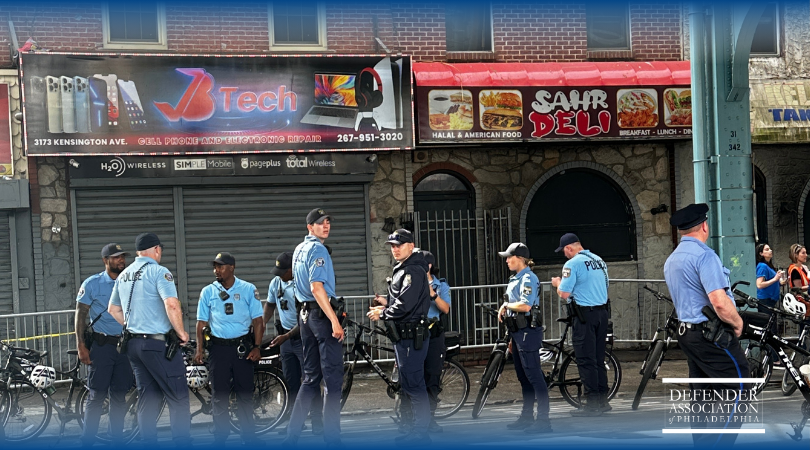
PHILADELPHIA— “The Defender Association of Philadelphia has serious concerns about the City’s resumption of police sweeps in Kensington—an approach we warned against last year. As we said then, these tactics target people who are already struggling: people without housing, people living with addiction, and people who need care—not cuffs. Pushing people from one block to another without real support doesn’t make anyone safer.


“City officials promised a more compassionate strategy, including a “Wellness Court” meant to offer treatment instead of punishment. But so far, that hasn’t happened in any meaningful way. People are still facing charges without a clear path to treatment, housing and other critical supports. Once again, we’re seeing the system respond to a public health crisis with arrests and incarceration. The Defender Association is present in Wellness Court to assist with the lifting of bench warrants, but everyone who has an out-of-county detainer is being sent to the prisons, risking their safety. 


“As public defenders, we work every day to connect our clients with the services they need. But we’re doing it with too few resources—and now with four additional treatment programs closing in Philadelphia- there are less resources now more than ever to meet the increasing need for treatment. Our office has led the effort to safely decarcerate the jails so the City can comply with a federal contempt order. The City’s return to police sweeps undermines that progress and puts our clients and prison staff at risk.


We need a seat at the table in the city’s public safety plan. If leaders are serious about helping Kensington, they must include us in the planning and invest in what actually works: stable housing, mental health care, harm reduction, and legal advocacy.


“We’ve seen that real investment makes communities safer. Displacement and arrest do not.”


Statement on New Prison Oversight Board

PHILADELPHIA— “Philadelphia voters have approved the ballot measure to establish a permanent Prison Oversight Board in the City Charter—marking a major step toward accountability, transparency, and basic human rights in our local jails.


“With this vote, our city has sent a clear message: we will no longer look away from the unacceptable conditions faced by incarcerated people and prison employees. This result reflects years of planning, organizing and advocating for transparency and accountability.
 

“We are grateful to the voters, our advocacy partners, and Councilmembers Isaiah Thomas and Nicolas O’Rourke, who worked so hard to make this moment possible. The people have spoken, and they are saying ‘no’ to dangerous and inhumane conditions on State Road and ‘yes’ to oversight, accountability, and dignity.


“The Defender Association looks forward to working with the new board, City Council, and community partners to ensure real oversight and lasting change.”


# # #

Follow us: @PhillyDefenders